Green Logistics in the Last Half-Decade: A Systematic Review
DOI:
https://doi.org/10.65150/EP-jmrr/V2E7/2026-11Keywords:
Green Logistics, Systematic Review, Transport and Logistics, Sustainability Management.Abstract
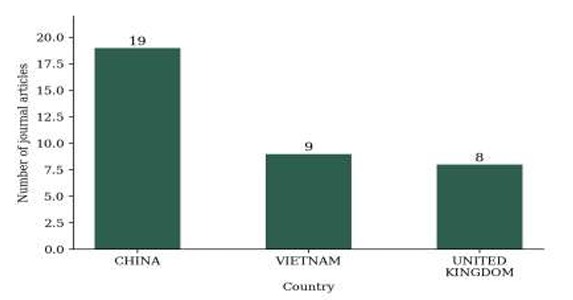
This study provides a systematic quantitative assessment technique (SQAT) of Green Logistics (GL) research conducted between 2021 and 2026, focusing on the transport and logistics sector. This review aims to map and evaluate global Green Logistics research trends published between 2021 and 2026. A total of 100 GL-related publications from 31 countries were reviewed, with the majority published in 2025, by Asian scholars. Among all contributing nations, China recorded the highest number of GL publications. Most of the reviewed studies employed empirical approaches, while a smaller proportion were conceptual in nature. Four primary data collection methods were identified (surveys, secondary data, interviews, and observations), with surveys emerging as the most dominant technique. The review further revealed three major thematic areas: GL magnitude, GL consequences, and GL mechanisms, with the magnitude dimension receiving the greatest scholarly attention. The authors highlight the need for increased GL research in underrepresented regions such as South America and Australasia and advocate for more conceptual contributions to balance the dominance of empirical works. They also recommend the adoption of qualitative and mixed-method approaches, which combine numerical data with participants' experiences and perspectives to generate deeper insights and a more comprehensive understanding of the research problem, particularly within studies focusing on GL consequences and mechanisms.
References
1) Abbasi, S., Mousavi, S. S., Farbod, E., Sorkhi, M. Y., & Parvin, M. (2024). Hybrid data mining and data-driven algorithms for a green logistics transportation network in the post-COVID era: A case study in the USA. _Systems and Soft Computing_, 6, 200156. https://doi.org/10.1016/j.sasc.2024.200156
2) Abbasi, S., Sheykhizadeh, M., Ghasemi, P., & Alizadeh, M. (2026). Location-allocation with green logistics and transport modeling: consideration of carbon emissions, recycling processes, and shipping frequency. _Cleaner Logistics and Supply Chain_, 100318. https://doi.org/10.1016/j.clscn.2026.100318
3) Afum, E., Agyabeng-Mensah, Y., & Baah, C. (2024). Lean logistics and corporate green practices: messianic methodologies for achieving business excellence in the logistics industry via green stakeholder satisfaction. _International Journal of Lean Six Sigma_, 15(7), 1555-1579. https://doi.org/10.1108/IJLSS-01-2021-0008
4) Agyabeng-Mensah, Y., Afum, E., Acquah, I. S. K., Dacosta, E., Baah, C., & Ahenkorah, E. (2021). The role of green logistics management practices, supply chain traceability and logistics ecocentricity in sustainability performance. _The International Journal of Logistics Management_, 32(2), 538-566. https://doi.org/10.1108/IJLM-05-2020-0187
5) Agyabeng-Mensah, Y., & Tang, L. (2021). The relationship among green human capital, green logistics practices, green competitiveness, social performance and financial performance. _Journal of Manufacturing Technology Management_, 32(7), 1377-1398. https://doi.org/10.1108/JMTM-11-2020-0441
6) Ahatsi, E., & Olanrewaju, O. (2026). Green logistics awareness and sustainable practice adoption in African logistics firms. _Discover Sustainability_. https://doi.org/10.1007/s43621-026-03512-2
7) Ali, Z. (2023). Predicting SMEs performance through green supply chain practices: a mediation model link of business process performance. _Asia Pacific Journal of Marketing and Logistics_, 35(2), 432-450. https://doi.org/10.1108/APJML-05-2021-0296
8) Aliyu, A.Z. (2026). Green Logistics Orientation in the Transport and Logistics Sector in the Last Half-Decade: A Systematic Review. _Sinergi International Journal of Logistics_, 4(1), 1-24.
9) Amanollahnejad, A., Izadi, J., & Zaghmout, B. (2026). Exploring blockchain for green logistics: how institutional forces and process innovation shape sustainability in SMEs. _Journal of Enterprise Information Management_, 1-27. https://doi.org/10.1108/JEIM-07-2025-0655
10) Atmayudha, A., Syauqi, A., & Purwanto, W. W. (2021). Green logistics of crude oil transportation: a multi-objective optimization approach. _Cleaner Logistics and Supply Chain_, 1, 100002. https://doi.org/10.1016/j.clscn.2021.100002
11) Baah, C., Amponsah, K. T., Issau, K., Ofori, D., Acquah, I. S. K., & Agyeman, D. O. (2021). Examining the interconnections between sustainable logistics practices, environmental reputation and financial performance: a mediation approach. _Vision_, 25(1), 47-64. https://doi.org/10.1177/0972262920988805
12) Bálint, M., Vilas-Boas da Silva, J. M., & Möhring, M. M. (2025). Green innovations in third-party logistics: managerial reasons, external stakeholder influences and contingencies in the natural-business environment. _Cogent Business & Management_, 12(1), 2460613. https://doi.org/10.1080/23311975.2025.2460613
13) Berberoglu, Y., Kazancoglu, Y., & Sagnak, M. (2023). Circularity assessment of logistics activities for green business performance management. _Business Strategy and the Environment_, 32(7), 4734-4749. https://doi.org/10.1002/bse.3390
14) Berti, N., & Finco, S. (2022). Digital twin and human factors in manufacturing and logistics systems: State of the art and future research directions. _IFAC-PapersOnLine_, 55(10), 1893-1898. https://doi.org/10.1016/j.ifacol.2022.09.675
15) Björklund, M. (2026). Now, then and tomorrow: green logistics practices from a proactive shippers' perspective. _International Journal of Physical Distribution & Logistics Management_, 1-18. https://doi.org/10.1108/IJPDLM-08-2025-0438
16) Blanco, E. E., & Sheffi, Y. (2024). Green logistics. In _Sustainable supply chains: A research-based textbook on operations and strategy_ (pp. 101-141). Cham: Springer International Publishing. https://doi.org/10.1007/978-3-031-45565-0_5
17) Bui, L. D., & Vu Tran, K. T. (2026). Determinants of green logistics adoption among Vietnamese SMEs: a TOE-DOI approach. _Asian Journal of Economics and Banking_, 1-21. https://doi.org/10.1108/AJEB-12-2024-0137
18) Bukhari, H., Basingab, M. S., Rizwan, A., Sánchez-Chero, M., Pavlatos, C., More, L. A. V., & Fotis, G. (2025). Sustainable green supply chain and logistics management using adaptive fuzzy-based particle swarm optimization. _Sustainable Computing: Informatics and Systems_, 46, 101119. https://doi.org/10.1016/j.suscom.2025.101119
19) Caggiani, L., Colovic, A., Prencipe, L. P., & Ottomanelli, M. (2021). A green logistics solution for last-mile deliveries considering e-vans and e-cargo bikes. _Transportation Research Procedia_, 52, 75-82. https://doi.org/10.1016/j.trpro.2021.01.010
20) Camacho-Vallejo, J. F., López-Vera, L., Smith, A. E., & González-Velarde, J. L. (2022). A tabu search algorithm to solve a green logistics bi-objective bi-level problem. _Annals of Operations Research_, 316(2), 927-953. https://doi.org/10.1007/s10479-021-04195-w
21) Castaneda, J., Cardona, J. F., Martins, L. D. C., & Juan, A. A. (2021). Supervised machine learning algorithms for measuring and promoting sustainable transportation and green logistics. _Transportation Research Procedia_, 58, 455-462. https://doi.org/10.1016/j.trpro.2021.11.061
22) Chatzoudes, D., Kadłubek, M., & Maditinos, D. (2024). Green logistics practices: The antecedents and effects for supply chain management in the modern era. _Equilibrium. Quarterly Journal of Economics and Economic Policy_, 19(3), 991-1034. https://doi.org/10.24136/eq.2864
23) Chen, P. (2025). Green skills in logistics vocational education: a comparative study of curriculum integration in China and Germany. _International Journal of Training and Development_, 29(2), 124-139. https://doi.org/10.1111/ijtd.12348
24) Cheng, C., Han, Y., & Ren, X. (2023). Analysis of technological innovation on provincial green development levels of logistics industry in China. _Environmental Science and Pollution Research_, 30(18), 53020-53036. https://doi.org/10.21203/rs.3.rs-2196829/v1
25) Cheng, H., Chaudhry, H. R., Kazi, I., & Umar, M. (2024). Unlocking greener supply chains: A global innovative perspective on the role of logistics performance in reducing ecological footprints. _Journal of Innovation & Knowledge_, 9(4), 100612. https://doi.org/10.1016/j.jik.2024.100612
26) Chepurna, M., Alvarez-Palau, E. J., Castillo Gutiérrez, C., & Viu Roig, M. (2025). Green logistics: in pursuit of a final definition. _Business Strategy and the Environment_, 34(7), 8983-9007. https://doi.org/10.1002/bse.70055
27) De Souza, E. D., Kerber, J. C., Bouzon, M., & Rodriguez, C. M. T. (2022). Performance evaluation of green logistics: Paving the way towards circular economy. _Cleaner Logistics and Supply Chain_, 3, 100019. https://doi.org/10.1016/j.clscn.2021.100019
28) Du, G., & Li, W. (2022). Does innovative city building promote green logistics efficiency? Evidence from a quasi-natural experiment with 285 cities. _Energy Economics_, 114, 106320. https://doi.org/10.1016/j.eneco.2022.106320
29) Esfahbodi, A., Zhang, Y., Liu, Y., & Geng, D. (2023). The fallacy of profitable green supply chains: The role of green information systems (GIS) in attenuating the sustainability trade-offs. _International Journal of Production Economics_, 255, 108703. https://doi.org/10.1016/j.ijpe.2022.108703
30) Eslamipoor, R. (2023). A two-stage stochastic planning model for locating product collection centers in green logistics networks. _Cleaner Logistics and Supply Chain_, 6, 100091. https://doi.org/10.1016/j.clscn.2022.100091
31) Ferreira, J. J., Candeias Fernandes, A. J., Nguyen, T. H. D., Rammal, H. G., & Pereira, V. (2026). Green logistics and supply chain knowledge management: an extended framework-based systematic literature review. _Journal of Knowledge Management_, 1-21. https://doi.org/10.1108/JKM-04-2025-0483
32) Fracarolli Nunes, M., Lee Park, C., & Machuca, J. A. (2026). Green fuels and emerging business models for sustainable logistics: decoding innovation for the genesis of new supply chains. _International Journal of Physical Distribution & Logistics Management_, 56(5), 595-623. https://doi.org/10.1108/IJPDLM-06-2025-0328
33) Du, G., & Li, W. (2022). Does innovative city building promote green logistics efficiency? Evidence from a quasi-natural experiment with 285 cities. Energy economics, 114, 106320. https://doi.org/10.1016/j.eneco.2022.106320
34) Garg, A., & Vemaraju, S. (2025). Green logistics management effect on sustainable logistics performance. _J Environ Earth Sci_, 7(02).
35) Gharibi, K., & Abdollahzadeh, S. (2025). A mixed-integer linear programming approach for circular economy-led closed-loop supply chains in green reverse logistics network design under uncertainty. _Journal of Enterprise Information Management_, 38(1), 1-31. https://doi.org/10.1108/JEIM-11-2020-0472
36) Heikkilä, M. (2026). Chain-level business model patterns for the green logistics transition. _Business Strategy and the Environment_, 1-11. https://doi.org/10.1002/bse.70703
37) Jarašūnienė, A., & Išoraitė, M. (2023, September). Green logistics: from theory to practice. In _International Conference TRANSBALTICA: Transportation Science and Technology_ (pp. 229-238). Cham: Springer Nature Switzerland. https://doi.org/10.1007/978-3-031-52652-7_23
38) Jazairy, A., Pohjosenperä, T., Prataviera, L. B., & Juntunen, J. (2025). Innovators and transformers: Revisiting the gap between academia and practice: insights from the green logistics phenomenon. _International Journal of Physical Distribution & Logistics Management_, 55(4), 341-360. https://doi.org/10.1108/IJPDLM-12-2023-0497
39) Jazairy, A., von Haartman, R., & Björklund, M. (2021). Unravelling collaboration mechanisms for green logistics: the perspectives of shippers and logistics service providers. _International Journal of Physical Distribution & Logistics Management_, 51(4), 423-448. https://doi.org/10.1108/IJPDLM-09-2019-0274
40) Jefimovaitė, L., & Vienažindienė, M. (2025). Green logistics concept and the impact of its implementation in the organisation: a systematic literature review and meta-analysis. _Engineering Management in Production and Services_, 17(1). https://doi.org/10.2478/emj-2025-0004
41) Jinru, L., Changbiao, Z., Ahmad, B., Irfan, M., & Nazir, R. (2022). How do green financing and green logistics affect the circular economy in the pandemic situation: key mediating role of sustainable production. _Economic Research-Ekonomska Istraživanja_, 35(1), 3836-3856. https://doi.org/10.1080/1331677X.2021.2004437
42) Kartal, M. T., & Taşkın, D. (2026). Impact of supply chain logistics and green transportation on green economics under green finance, oil price shocks, and geopolitical risk: evidence from the globe via novel quantile methods. _Financial Innovation_, 12(1), 31. https://doi.org/10.1186/s40854-025-00899-1
43) Kim, D., Na, J., & Ha, H. K. (2024). Exploring the impact of green logistics practices and relevant government policy on the financial efficiency of logistics companies. _Heliyon_, 10(10). https://doi.org/10.1016/j.heliyon.2024.e30916
44) Kotlars, A., & Skribans, V. (2024). Literature review: Efficiency, environment and robotization in first and last mile logistics. _Transportation Research Interdisciplinary Perspectives_, 27, 101215. https://doi.org/10.1016/j.trip.2024.101215
45) Le, S. T. (2023). Investigating the drivers of the reverse logistics implementation in reducing waste in Vietnam. _Environmental Health Insights_, 17, 11786302231211058. https://doi.org/10.1177/11786302231211058
46) Li, X., Sohail, S., Majeed, M. T., & Ahmad, W. (2021). Green logistics, economic growth, and environmental quality: evidence from one belt and road initiative economies. _Environmental Science and Pollution Research_, 28(24), 30664-30674. https://doi.org/10.1007/s11356-021-12839-4
47) Li, Y., Lin, Y., Lim, M. K., Xiong, W., Huang, X., Shi, Y., & Su, J. (2024). An intelligent distribution system for green logistics operations in the blockchain environment. _International Journal of Logistics Research and Applications_, 27(11), 2080-2103. https://doi.org/10.1080/13675567.2023.2289463
48) Luu, T. V., Chromjaková, F., & Nguyen, H. Q. (2023). A model of industry 4.0 and a circular economy for green logistics and a sustainable supply chain. _Business Strategy & Development_, 6(4), 897-920. https://doi.org/10.1002/bsd2.286
49) Maji, I. K., Saari, M. Y., & Muhammad, S. (2024). Regulatory role, clean logistics technology and environmental sustainability. _Social Sciences & Humanities Open_, 9, 100786. https://doi.org/10.1016/j.ssaho.2023.100786
50) Maji, I. K., Saudi, N. S. M., & Yusuf, M. (2023). An assessment of green logistics and environmental sustainability: Evidence from Bauchi. _Cleaner Logistics and Supply Chain_, 6, 100097. https://doi.org/10.1016/j.clscn.2023.100097
51) Masanta, M., Singh, U. P., Selvan, K., & Das, P. (2026). Optimization of green logistics network in a multi-echelon multi-product supply chain. _Journal of Industrial and Production Engineering_, 43(1), 1-21. https://doi.org/10.1080/21681015.2025.2509909
52) McKinnon, A., Browne, M., Whiteing, A., & Piecyk, M. (Eds.). (2015). _Green logistics: Improving the environmental sustainability of logistics_. Kogan Page Publishers.
53) Miao, Y. (2026). Measurement and Spatial Correlation Analysis of Regional Green Logistics Efficiency under Dual Carbon Objectives---Based on SBM-DEA and Spatial Econometric Model. _Procedia Computer Science_, 281, 272-281. https://doi.org/10.1016/j.procs.2026.04.216
54) Mohsin, A. K. M., Tushar, H., Hossain, S. F. A., Chisty, K. K. S., Iqbal, M. M., Kamruzzaman, M., & Rahman, S. (2022). Green logistics and environment, economic growth in the context of the Belt and Road Initiative. _Heliyon_, 8(6). https://doi.org/10.1016/j.heliyon.2022.e09641
55) Nagy, G., & Szentesi, S. (2024). Green logistics: Transforming supply chains for a sustainable future. _Advanced Logistic Systems-Theory and Practice_, 18(3), 29-42. https://doi.org/10.32971/als.2024.026
56) Namagembe, S., Nantumbwe, S., Tusiime, W., Kalema, R., Kalikwani, G., & Nampijja, R. (2025). Adoption of green inbound logistics practices: the role of internal environmental communication and organizational environmental governance. _Modern Supply Chain Research and Applications_, 7(1), 102-123. https://doi.org/10.1108/MSCRA-06-2024-0020
57) Nguyen, A. T., & Nguyen, T. T. T. (2025). Reciprocal mediation effects between Infrastructure and Green Logistics Performance Index on the Balance of Trade of Asian countries. _Journal of International Logistics and Trade_, 1-23.https://doi.org/10.1108/JILT-07-2025-0057
58) Nguyen, X. T., & Nguyen, M. H. T. (2026). Cognitive trust and affective impulsiveness: a dual-pathway model of green logistics adoption in Vietnam. _Asian Journal of Economics and Banking_, 1-22. https://doi.org/10.1108/AJEB-03-2026-0045
59) Nguyen-Huynh-Thanh, D., & Nhu-Mai, N. T. (2026). Operational efficiency as a feasibility mechanism linking green logistics practices to sustainability performance: Evidence from emerging-economy 3PL firms. _Sustainable Futures_, 11, 101922. https://doi.org/10.1016/j.sftr.2026.101922
60) Nicoletti, B., & Appolloni, A. (2024). Green Logistics 5.0: a review of sustainability-oriented innovation with foundation models in logistics. _European Journal of Innovation Management_, 27(9), 542-561. https://doi.org/10.1108/EJIM-07-2024-0787
61) Nielsen, P., Dahanayaka, M., Perera, H. N., Thibbotuwawa, A., & Kilic, D. K. (2024). A systematic review of vehicle routing problems and models in multi-echelon distribution networks. _Supply Chain Analytics_, 7, 100072. https://doi.org/10.1016/j.sca.2024.100072
62) Osman, M. C., Huge-Brodin, M., Ammenberg, J., & Karlsson, J. (2023). Exploring green logistics practices in freight transport and logistics: a study of biomethane use in Sweden. _International Journal of Logistics Research and Applications_, 26(5), 548-567. https://doi.org/10.1080/13675567.2022.2100332
63) Ouni, M., & Ben Abdallah, K. (2024). Environmental sustainability and green logistics: Evidence from BRICS and Gulf countries by cross-sectionally augmented autoregressive distributed lag (CS-ARDL) approach. _Sustainable Development_, 32(4), 3753-3770. https://doi.org/10.1002/sd.2856
64) Panghal, A., P, A., Vern, P., & Mor, R. S. (2024). Adoption barriers to green logistics in the Indian food industry: A circular economy perspective. _International Social Science Journal_, 74(252), 519-538. https://doi.org/10.1111/issj.12466
65) Patrucco, A., Seuring, S., Fosso Wamba, S., Kaliyan, M., & Appolloni, A. (2025). Guest editorial: The missing link between supply chain technologies and sustainability issues: advancing theory and practice. _International Journal of Physical Distribution & Logistics Management_, 55(3), 177-195. https://doi.org/10.1108/IJPDLM-04-2025-559
66) Perotti, S., Micheli, G. J., & Cagno, E. (2015). Motivations and barriers to the adoption of green supply chain practices among 3PLs. _International Journal of Logistics Systems and Management_, 20(2), 179-198. https://doi.org/10.1504/IJLSM.2015.067255
67) Prataviera, L. B., Creazza, A., & Perotti, S. (2024). A call to action: a stakeholder analysis of green logistics practices. _The International Journal of Logistics Management_, 35(3), 979-1008. https://doi.org/10.1108/IJLM-09-2022-0381
68) Qiu, M., Gao, L., Lin, Z., Zheng, M., & Lin, Q. (2024). Green logistics optimization for coal supply in a power plant connecting maritime port. _Cleaner Logistics and Supply Chain_, 13, 100177. https://doi.org/10.1016/j.clscn.2024.100177
69) Roy, S., & Mohanty, R. P. (2024). Green logistics operations and its impact on supply chain sustainability: An empirical study. _Business Strategy and the Environment_, 33(2), 1447-1476. https://doi.org/10.1002/bse.3531
70) Shamout, M. D., Hamouche, S., Elayan, M. B., Rawashdeh, A. M., Elrehail, H., & Alshwayat, D. (2024). Modeling the moderating role of institutions on logistics--environment nexus in developed and developing economies. _Energy & Environment_, 35(7), 3441-3462. https://doi.org/10.1177/0958305X231167471
71) Sharma, M., Luthra, S., Joshi, S., Kumar, A., & Jain, A. (2023). Green logistics driven circular practices adoption in industry 4.0 Era: A moderating effect of institution pressure and supply chain flexibility. _Journal of Cleaner Production_, 383, 135284. https://doi.org/10.1016/j.jclepro.2022.135284
72) Shujaat Mubarik, M., Devadason, E. S., & Kam Jia Yi, A. (2025). Prioritising green logistics practices for the freight logistics industry in Malaysia. _International Journal of Logistics Research and Applications_, 1-17. https://doi.org/10.1080/13675567.2025.2497545
73) Starostka-Patyk, M., Bajdor, P., & Białas, J. (2024). Green logistics performance Index as a benchmarking tool for EU countries environmental sustainability. _Ecological Indicators_, 158, 111396. https://doi.org/10.1016/j.ecolind.2023.111396
74) Surury, F., Syauqi, A., & Purwanto, W. W. (2021). Multi-objective optimization of petroleum product logistics in Eastern Indonesia region. _The Asian Journal of Shipping and Logistics_, 37(3), 220-230. https://doi.org/10.1016/j.ajsl.2021.05.003
75) Tetteh, F. K., Kwateng, K. O., & Mensah, J. (2024). Green logistics practices: A bibliometric and systematic methodological review and future research opportunities. _Journal of Cleaner Production_, 476, 143735. https://doi.org/10.1016/j.jclepro.2024.143735
76) Theeraviriya, C., Ruamboon, K., & Praseeratasang, N. (2021). Solving the multi-level location routing problem considering the environmental impact using a hybrid metaheuristic. _International Journal of Engineering Business Management_, 13, 1-16. https://doi.org/10.1177/18479790211017353
77) Tran, M. N. (2024). Impact of green logistics on Vietnam's regional trade. _The Asian Journal of Shipping and Logistics_, 40(2), 45-58. https://doi.org/10.1016/j.ajsl.2024.02.001
78) Wang, L., & Zhao, Y. (2023). Carbon emission reduction in cold chain logistics under carbon trading mechanism. _Journal of Cleaner Production_, 412, 137456. https://doi.org/10.1016/j.jclepro.2023.137456
79) Wu, H., & Li, Z. (2025). Digitalization and green logistics performance: Evidence from Chinese logistics enterprises. _Technology in Society_, 71, 102112. https://doi.org/10.1016/j.techsoc.2025.102112
80) Xu, J., & Chen, M. (2022). Path optimization of green logistics distribution based on genetic algorithm. _Computers & Industrial Engineering_, 171, 108425. https://doi.org/10.1016/j.cie.2022.108425
81) Yang, S., & Zhang, Q. (2024). Green warehousing practices and their impact on logistics sustainability. _International Journal of Production Research_, 62(10), 3567-3584. https://doi.org/10.1080/00207543.2023.2245890
82) Yadav, G., Luthra, S., Jakhar, S. K., Mangla, S. K., & Rai, D. P. (2020). A framework to achieve sustainability through agile project management practices. _Production Planning & Control_, 31(2-3), 216-233. https://doi.org/10.1080/09537287.2019.1631469
83) Zahra, F., & Rehman, S. U. (2023). Green logistics and firm performance: The mediating role of green innovation. _Sustainability_, 15(4), 3421. https://doi.org/10.3390/su15043421
84) Zhang, H., & Liu, Y. (2025). Blockchain-enabled traceability in green logistics: A case study approach. _International Journal of Information Management_, 68, 102567. https://doi.org/10.1016/j.ijinfomgt.2024.102567
85) Zhou, X., & Wang, P. (2021). Evaluation of green logistics efficiency in China based on DEA-Malmquist index. _Sustainability_, 13(18), 10234. https://doi.org/10.3390/su131810234
86) Zhu, Q., & Sarkis, J. (2022). Green supply chain management: Pressures, practices and performance within the Chinese automobile industry. _Journal of Cleaner Production_, 35, 142-147. https://doi.org/10.1016/j.jclepro.2012.05.021
87) Zsidisin, G. A., & Siferd, S. P. (2021). Environmental purchasing: a framework for theory development. _European Journal of Purchasing & Supply Management_, 7(1), 61-73. https://doi.org/10.1016/S0969-7012(00)00007-1
88) Ahmad, S., & Wong, K. Y. (2024). Sustainable last-mile delivery: Trends and future research directions. _Transportation Research Part E: Logistics and Transportation Review_, 182, 103389. https://doi.org/10.1016/j.tre.2023.103389
89) Baker, T., & Jayaraman, V. (2023). The role of big data analytics in green logistics decision making. _Annals of Operations Research_, 320(1), 115-132. https://doi.org/10.1007/s10479-022-04789-0
90) Choi, T. M., & Cheng, T. C. E. (2022). Sustainable supply chain management: A review and research agenda. _International Journal of Production Economics_, 241, 108281. https://doi.org/10.1016/j.ijpe.2021.108281
91) Dubey, R., Bryde, D. J., Foropon, C., Graham, G., Giannakis, M., & Mishra, D. B. (2022). AI-powered predictive analytics and green supply chain performance. _International Journal of Production Economics_, 247, 108456. https://doi.org/10.1016/j.ijpe.2022.108456
92) Govindan, K., Rajendran, S., Sarkis, J., & Murugesan, P. (2015). Multi criteria decision making approaches for green supplier evaluation and selection: a literature review. _Journal of Cleaner Production_, 98, 66-83. https://doi.org/10.1016/j.jclepro.2013.06.046
93) Hsiao, Y. H., Chen, M. C., & Chin, C. L. (2023). Green logistics and supply chain management: A bibliometric analysis. _Transportation Research Part D: Transport and Environment_, 116, 103612. https://doi.org/10.1016/j.trd.2023.103612
94) Ivanov, D., Tsipoulanidis, A., & Schönberger, J. (2024). Digital supply chain and logistics. In _Global Supply Chain and Operations Management_ (pp. 589-615). Springer. https://doi.org/10.1007/978-3-031-45565-0_18
95) Kumar, V., & Rahman, Z. (2025). Circular economy and green logistics: A systematic review. _Business Strategy and the Environment_, 34(2), 1234-1256. https://doi.org/10.1002/bse.3567
96) Liu, J., & Yuan, C. (2023). Green logistics performance evaluation using fuzzy AHP and TOPSIS. _Sustainability_, 15(9), 7234. https://doi.org/10.3390/su15097234
97) Mishra, R., & Singh, R. K. (2024). Barriers to green logistics adoption in developing economies. _Journal of Business Research_, 165, 114512. https://doi.org/10.1016/j.jbusres.2023.114512
98) Sarkis, J., Zhu, Q., & Lai, K. H. (2021). An organizational theoretic review of green supply chain management literature. _International Journal of Production Economics_, 130(1), 1-15. https://doi.org/10.1016/j.ijpe.2010.11.010
99) Tseng, M. L., Islam, M. S., Karia, N., Fauzi, F. A., & Afrin, S. (2020). A literature review on green supply chain management: Trends and future challenges. _Resources, Conservation and Recycling_, 141, 145-162. https://doi.org/10.1016/j.resconrec.2018.10.009
100) Walker, H., Di Sisto, L., & McBain, D. (2023). Drivers and barriers to environmental supply chain management practices: Lessons from the public and private sectors. _Journal of Purchasing and Supply Management_, 14(1), 69-85. https://doi.org/10.1016/j.pursup.2008.01.007
Downloads
Published
Issue
Section
License
Copyright (c) 2026 Mohammed Rabiu Musa, PhD (Translator); Abdullahi Zakari Aliyu, Kabiru Musa Yusuf, Kabir Ibrahimm Halliru, Idris Safiyanu Elatikpo (Author)

This work is licensed under a Creative Commons Attribution 4.0 International License.