Revisiting the Role of Marketing Mix in Shaping Brand Preference in Higher Education
DOI:
https://doi.org/10.65150/EP-jmrr/V2E5/2026-02Keywords:
marketing mix, brand preference, higher education, educational service marketing,Abstract
This study examines the role of the marketing mix in increasing brand preference in higher education institutions, with a specific focus on a private university context in Indonesia. The main objective of this research is to analyze how the implementation of an integrated marketing mix contributes to the formation of brand preference among prospective and current students. The study is grounded in the recognition of a research gap within existing literature, where most higher education marketing studies emphasize brand image, student satisfaction, or promotional effectiveness, while empirical investigations that link the holistic marketing mix directly to brand preference—particularly in faith-based private universities—remain limited and underexplored.
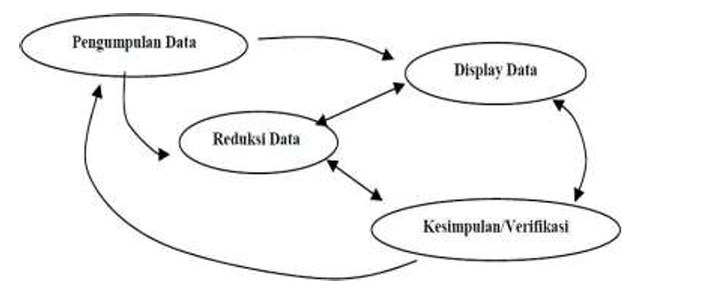
This research adopts a qualitative case study approach conducted at Universitas Muhammadiyah Purwokerto (UMP) and IAIN Syech Nurjati Cirebon (IAINSNC). Data were collected through in-depth interviews with university leaders, marketing managers, academic staff, and administrative personnel, complemented by document analysis and institutional marketing materials. The data were analyzed using thematic analysis, which enabled the identification of recurring patterns across marketing mix elements, including educational offerings, pricing strategies, service processes, distribution channels, promotional activities, physical evidence, and human resources.
The findings indicate that the effective implementation of the marketing mix plays a significant role in strengthening brand preference by shaping positive perceptions, trust, and emotional attachment toward the institution. Brand preference is not driven solely by promotional efforts but emerges from the consistency between academic quality, service delivery, institutional values, and strategic communication. The study also reveals that internal marketing and value-based branding are critical factors in sustaining brand preference. This research contributes empirically to the higher education marketing literature and provides practical insights for universities seeking to enhance brand preference through integrated, ethical marketing strategies.
References
1) Aaker, J. L.-M. (2001). Consumption Symbols As Carriers Of Culture: A Study Of Japanese And Spanish Brand Personality Constructs. Journal Of Personality And Social Psychology, 492–508. doi:10.1037/0022-3514.81.3.4921991.
2) Aarikka-Stenroos, L. A. (2018). Building B2B Relationships Via Initiation: Three Cases From The Norwegian-South Korean International Project Business. Industrial Marketing Management, 74–85. Https://Doi.Org/10.1016/J.Indmarman.2017.09.027.
3) Adriatico, J. &.-S. (2022). An Analysis of the Impact of Choice Overload on Consumer Decision Paralysis. Journal of Economics, Finance and Accounting Studies, 55–75. 10.32996/jefas.2022.4.1.4.
4) Alam, B. (2017). Pemasaran Strategi Jasa Pendidikan. Bandung: CV Alfabeta .
5) Alamro, A. &. (2011). Antecedents Of Brand Preference Of Mobile Telecommunications Services. Journal Of Product & Brand Management, 475–486. doi:10.1108/10610421111166621.
6) Alma, B. &. (2021). Manajemen Corporate Dan Strategi Pemasaran Jasa Pendidikan Fokus Pada Mutu Dan Pelayanan Prima. Yogayakarta: alfabeta.
7) Alternatifnya Clatworthy, S. (2012). Bridging The Gap Between Brand Strategy And Customer Experience. Managing Service Quality: An International Journal, 22(2), 108–127. Doi:10.1108/09604521211218936.
8) Ardiani, S. E. (2020). The Effect of Hospital Image and Service Quality on Customer Loyalty Through Customer Satisfaction. Advances in Social Science, Education and Humanities Research, DOI:10.2991/assehr.k.200407.015.
9) Arici, H. E. (2021). The Role of Social Media Marketing Activities on International Students’ Brand Preference: A Study on English-Speaking Universities of Germany. In Global Perspectives on Recruiting International Students, 51–64, 2021. doi:10.1108/978-1- 83982-518-720211003.
10) Balmer, J. M. (2019). Marketing, The Past And Corporate Heritage. Marketing Theory, 217–227.
https://doi.org/10.1177/1470593118790636.
11) Bhattacharya, S. K. (2019). Viral Marketing on Social Networks: An Epidemiological Perspective. Physica A: Statistical Mechanics and Its Applications, 478–90. doi:10.1016/j.physa.2019.03.008.
12) Bollinger, B. E. (2022). Educational Campaigns for Product Labels: Evidence from On-Shelf Nutritional Labeling. Journal of Marketing Research, 157–172.
13) Caruana, A. L. (2016). Learner Satisfaction In Marketing Simulation Games: Antecedents And Influencers. Journal Of Marketing Education, 107–118.
14) Chan, S. (2003). Relationship Marketing, Inovasi Pemasaran Yang Membuat Pelanggan Bertekuk Lutut, Cetakan Kedua. Jakarta: PT Gramedia Pustaka Utama.
15) Chen, C.-T. (2016). The Investigation on Brand Image of University Education and Students’ Word-of-Mouth Behavior. Higher Education Studies, 23–33.
16) Chernev, A. H. (2011). Competing for consumer identity: Limits to self-expression and the perils of lifestyle branding. Journal of Marketing, 66–82. https://doi.org/10.1509/jmkg.75.3.66.
17) Clatworthy, S. (2012). Bridging The Gap Between Brand Strategy And Customer Experience. Managing Service Quality. An International Journal, 108–127. doi:10.1108/09604521211218936.
18) Corsaro, D. &. (2021). Managing The Sales Transformation Process In B2B: Between Human And Digital. Italian Journal of Marketing, 25–56. https://doi.org/10.1007/s43039-021- 00025-w.
19) Cresswell, J. &. (2018). Research Design: Qualitative, Quantitative, and Mixed Methods Approaches. California: SAGE.
20) Das, G. A. (2019). Does Brand Experience Translate Into Brand Commitment? A Mediated- Moderation Model Of Brand Passion And Perceived Brand Ethicality. Journal of Business Research, 479–490.
21) Decker, R. &. (2010). Estimating Aggregate Consumer Preferences From Online Product Reviews. International Journal Of Research in Marketing, 293–307. doi:10.1016/j.ijresmar.2010.09.001.
22) Denzin, N. &. (1994). Handbook Of Qualitative Research. Thousand Oaks: CA: SAGE. Dessart, L., Aldas-Manzano, J.,& Veloutsou, C. (2019). Unveiling Heterogeneous Engagement-Based Loyalty In Brand Communities. Eur. J. Mark, 53, 1854–1881.
23) Dewi, L. (2020). Customer Loyalty, Through Customer Satisfaction In Customers PT. XYZ. Jurnal Aplikasi Manajemen, 189–200. 10.21776/ub.jam.2020.018.01.19.
24) Eavani, F. &. (2012). Marketing Mix: a Critical Review of the Concept. Elixir Marketing Management, 9914–9920.
25) Ebrahim, R. A. (2016). A Brand Preference and Repurchase Intention Model: The Role of Consumer Experience. Journal of Marketing Management, 13–14 (2016): 1230–59. doi:10.1080/0267257X.2016.1150322.
26) Fu, F. P. (2018). ROI Marketing: Measuring, Demonstrating, And Improving Value. Performance Improvement, 6–13.
27) Gajić, J. (2012). Importance Of Marketing Mix In Higher Education Institutions. Singidunum Journal 29-41, 29-41.
28) Gary Kotler, P., & Armstrong. (2014). Dasar-Dasar Pemasaran. Cetakan ke. 4. Jakarta: Prenhallind .
29) Goldring, E. B. (2008). Parent Preferences and Parent Choices: The Public–Private Decision About School Choice,. Journal of Education Policy, 209–230.
30) Goli, A. P. (2022). Effects of Payment on User Engagement in Online Courses. Journal of Marketing Research,, 11–34.
31) Goode, M. R. (2010). The Effect of Experiential Analogies on Consumer Perceptions and Attitudes Journal Of Marketing Research, 274–286. doi:10.1509/jmkr.47.2.274
32) Handayani, A. (2017). Analisis Bauran Pemasaran Terhadap Keputusan Mahasiswa Memilih Program Studi (Studi di Fakultas Ekonomi Universitas Bojonegoro. S2, Universitas Muhamadiyah Surakarta. http://eprints.ums.ac.id/49282/).
33) Hann, I. H., & Png., I. P. (2008). Consumer Privacy and Marketing Avoidance: A Static Model. Management Science 54, no. 6, 1094–1103. doi:10.1287/mnsc.1070.0837.
34) Hedman, I. &. (2018). Brand Image As A Facilitator Of Relationship Initiation. In Developing Insights On Branding In The B2B Context. Emerald Publishing Limited, https://doi.org/10.1108/978-1-78756-275-220181006.
35) Heilman, C. M. (2000). The Evolution of Brand Preferences and Choice Behaviors of Consumers New to a Market. Journal of Marketing Research, 37(2), 139–155. https://doi.org/10.1509/jmkr.37.2.139.18728.
36) Hyman, M. R. (2015). The Marketing Mix And The Political Marketplace. NM State University Business Outlook, 1–4.
37) Ibidunni, O. S. (2011). Marketing Mix As Tools For Achieving Competitive Advantage In Nigerian Market Place: Multi-National And Indigenous Companies In Perspective. Journal Of Marketing Development And Competitiveness, 81–94.
38) Iglesias, O. S.-F. (2011). The Role Of Brand Experience And Affective Commitment In Determining Brand Loyalty.Journal Of Brand Management, 570–582. doi:10.1057/bm. 2010.58.
39) Indrajit, R. D. (2003). Manajemen Persediaan. Jakarta: Grasindo.
40) Irianto, Y. B. (2014). Pemasaran Pendidikan. Jurnal Pendidikan, 226.
41) Išoraitė, M. (2016). Marketing Mix: Theoretical Aspects. International Journal of Research- Granthaalayah, 25-37.
42) Jacobs, B. C. (1982). Methods For Mainstreaming In Business And Marketing Education. The Journal of Business Education, 52–56.
43) James, C. A. (1995). The Practice Of Educational Marketing In Schools. Educational Management Administration And Leadership,, 75–88.
44) James, C. A. (1995). The practice of educational marketing in schools. Educational Management, Administration, and Leadership. 75–88.
45) Javed, M. K. (2020). Effects Of Online Retailer After Delivery Services On Repurchase Intention: An Empirical Analysis Of Customers’ Past Experience And Future Confidence With The Retailer. Journal of Retailing and Consumer Services, 101942.
46) Karnani, A. (2007). The Mirage Of Marketing To The Bottom Of The Pyramid. California Management Review, 91–111.
47) Keller, K. L. (2013). Strategic Brand Management: Building, Measuring, and Managing Brand Equity. Fourth Edition. Harlow: Pearson Education Inc.
48) Khamitov, M. W. (2019). How Well Do Consumer-Brand Relationships Drive Customer Brand Loyalty? Generalizations From A Meta-Analysis Of Brand Relationship Elasticity. Journal Of Consumer Research, 435–459.
49) Kim, D. M. (2011). The Effects Of Customers’ Perceptions Of Brand Personality In Casual Theme Restaurants. International Journal Of Hospitality Management, 448–458. doi:10.1016/j.ijhm.2010.09.008.
50) Kotler, P. (2000). The Function of School Administration. New York: NYT News Letter March. Kotler, P. A. (2009). Manajemen Pemasaran,. Jakarta: Erlangga.
51) Labaso, S. (2018). Penerapan Marketing Mix sebagai Strategi Pemasaran Jasa Pendidikan di MAN 1 Yogyakarta. MANAGERIA. Jurnal Manajemen Pendidikan Islam, 289–311. https://doi.org/10.14421/manageria.2018.32-05.
52) Liu, H.-H. a.-N. (2019). Interrelationships between Viral Marketing and Purchase Intention via Customer-Based Brand Equity. Journal of Business and Management Sciences, 72–83. doi:10.12691/jbms-7-2-3.
53) López, M. A. (2013). How WOM Marketing Contributes to New Product Adoption: Testing Competitive Communication Strategies. European Journal of Marketing 47, no. 7, 1089–1114. doi:10.1108/03090561311324228.
54) Luckyardi, S. H. (2022). Significances Of Marketing Education In Reducing Poverty In Indonesia: Special Review On Quality Of Life. Journal Of Eastern European And Central Asian Research, 101–111.
55) Marcus, J. (2021). From Google Ads to NFL Sponsorships: Colleges Throw Billions at Marketing Themselves to Attract Students. The Washington Post (October 3)https://www.washingtonpost.com/ local/education/colleges-marketing-student- recruitment/2021/09).
56) Maspufah, H. (. (2020). Analisis Marketing Mix Terhadap Mahasiswa Baru Dalam Memutuskan Studi Lanjut Pada Sekolah Tinggi Ilmu Ekonomi Mandala Jember. JABE, 400. https://doi.org/10.30998/jabe.v6i4.5830).
57) Mckenzie, D. &. (2014). What Are We Learning From Business Training And Entrepreneurship Evaluations Around The Developing World?. The World Bank Research Observer,, 48–82.
58) Miao Li, Y. H. (2021). From Interactivity to Brand Preference: The Role of Social Comparison and Perceived Value in a Virtual Brand Community. Sustainability, 625; https://doi.org/10.3390/su13020625.
59) Miles, M. B., & Huberman, A. M. (1984). Qualitative Data Analysis. London: SAGE.
60) Mittal, B. (2016). The Maximizing Consumer Wants Even More Choices: How Consumers Cope With The Marketplace Of Overchoice. Journal Of Retailing And Consumer Services, 361–370.Https://Doi.Org/10.1016/J.Jretconser.2016.05.003.
61) Morgan-Thomas, A. &. (2013). Beyond Technology Acceptance: Brand Relationships And Online Brand Experience. Journal Of Business Research, 21–27. doi:10.1016/j.jbusres.2011.07.019 .
62) Mulyawan, A. &. (2013). Analisis Deskriptif Pemasaran Jasa di STMIK Mardira Indonesia Bandung. Journal Computech & Bisnis, 42–55.
63) Murti, T. K. (2019). Pengaruh Brand Image, Promosi Dan Biaya Pendidikan Terhadap Keputusan Mahasiswa Melanjutkan Studi Pada Program Studi Pendidikan Ekonomi. Jurnal Ilmiah Pendidikan Ekonomi , 102–10.
64) Nguyen, C. A. (2020). A Study of Factors Affecting Brand Awareness in the Context of Viral Marketing in Vietnam. International Journal of Advanced Science and Technology, 5401–11. doi:10.2139/ssrn.3906104. .
65) Ningsih, J. &. (2023). Implementation Of Marketing Strategies In Improving Marketing Performance At CV. Tio Craft Indonesia. World Journal Of Advanced Research And Reviews, 831–841. 10.30574/Wjarr.2023.19.3.1897.
66) Page, W. K. (2021). Three Ways to Engage Consumers for Sustainable Consumption. Impact at JMR (September 23), https://www.ama.org/2021/09/23/three-ways-to-engage- consumers-for-sustainable-consumption.
67) Page, W. K. (2021). Three Ways to Engage Consumers for Sustainable Consumption. Impact at JMR, https://www.ama.org/2021/09/23/three-ways-to-engage-consumers-for- sustainable-consumption.
68) Pakurár, M. H. (2019). The Service Quality Dimensions That Affect Customer Satisfaction In The Jordanian Banking Sector. Sustainability (Switzerland, Https://Doi.Org/10.3390/Su11041113.
69) Pandey, S. K. (2018). Assessing The Role Of Emotions In B2B Decision Making: An Exploratory Study. Journal Of Indian Business Research, https://doi.org/10.1108/JIBR- 10-2017-0171.
70) Patton, M. Q. (2014). Qualitative Research & Evaluation Methods: Integrating Theory And Practice. Sage Publication ISBN-10 (9781412972123).
71) Pearson, P. K., & Gary. (2012. ). Armstrong. Principles of Marketing. Fourteenth Global Edition.
72) Pimentel, P. &.-S. (2023). Brand Activism As A Marketing Strategy: An Integrative Framework And Research Agenda. Journal Of Brand Management, 1–23. 10.1057/S41262-023- 00335–8..
73) PP. (2021). Peraturan Pemerintah Nomor 4 Tahun 2022 tentang Perubahan atas Peraturan Pemerintah Nomor 57 Tahun 2021 tentang Standar Nasional Pendidikan.
74) Priangani, A. (2013). Memperkuat Manajemen Pemasaran Dalam Konteks Persaingan Global. Jurnal kebangsaan, 1-9.
75) Puriwat, W. &. (2021). The Role of Viral Marketing in Social Media on Brand Recognition and Preference. Emerging Science Journal, 855–867. 10.28991/esj-2021-01315.
76) Rahman, V. (2021). Evaluasi Penentu Minat Studi Pada Perguruan Tinggi Swasta dengan Perspektif Marketing Mi. At – Tadbir Jurnal Ilmiah Manajemen, 71 – 81 DOI: 10.31602/atd.v5i2.4366.
77) Riedel, A. M. (2022). Consumers experiencing vulnerability: A state of play in the literature. Journal of Services Marketing, 110–128.
78) Rimawan, E. (2017). The Influence of Product Quality, Service Quality, and Trust on Customer Satisfaction and Its Impact on Customer Loyalty. International Journal of Scientific and Engineering Research Volume 8, Issue 7, July - 2017 ISSN 2229-5518.
79) Risdwiyanto, A., & Kurniyati, Y. (2015). Strategi Pemasaran Perguruan Tinggi Swasta Di Kabupaten Sleman, Yogyakarta, Berbasis Rangsangan Pemasaran. Journal Maksipreneur, Vol. V, No. 1, Desember , 1 – 23.
80) Robaniyyah, Q. (2014). Manajemen Pemasaran Perguruan Tinggi di STIKes Madan. Yogyakarta: PPs UIN Sunan Kalijaga .
81) Rochmah, S., & Diah Yuliana, A. A. (2017). Pengaruh Faktor-Faktor Marketing Mix (Product, Place, Promotion, Price) Terhadap Keputusan Untuk Masuk Stie Semarang Yang Dimediasi Word Of Mouth. Journal Stie Semarang, 130.
82) Rodriguez, M. &. (2018). Developing Tomorrow’s Global Sales Leader: Adapting To Cultural Differences Utilizing Role Play. Journal For Advancement Of Marketing Education,, 31–38.
83) Rosa, J. A. ( 2012). Marketing Education For The Next Four Billion: Challenges and innovations. Journal of Marketing Education, 44–54.
84) Rosenbaum, M. S. (2023). A Multicultural Service Sensitivity Exercise For Marketing Students.Journal of Marketing Education, 5–17.
85) Scorita, K. &. (2022). Penerapan Marketing Mix Pada Perguruan Tinggi. Kinerja, 67-77.10.34005/Kinerja.V4i1.1625.
86) Singarimbun, M., & Effendi, S. (1989). Metode Penelitian Survei. Jakarta: LP3ES.
87) Singh, M. (2012). Marketing Mix Of 4P’s For Competitive Advantage. IOSR Journal Of Business And Management, 40–45.
88) Slambolchi, A. F. (2015). The Effect of Elements of Service Marketing Mix on Brand Equity, from the Customers’ Point of View (Case Study: Branches of Melli Bank in Hamadan). Arabian J Bus Manag Review,, 168.
89) Slamet, F. (2011). Kendala Dalam Pemasaran.”. Dasar-Dasar Manajemen Pemasaran (Konsep, Strategi, dan Kasus). Yogyakarta: CAPS.
90) Solcansky, M. &. (2010). Measurement Of Marketing Effectiveness. Economics And Management, 755–759.
91) Spielmann, N. C. (2021). Place As A Nexus For Corporate Heritage Identity: An International Study Of Family-Owned Wineries. Journal of Business Research, 826–837. https://doi.org/10.1016/j.jbusres.2019.05.024.
92) Stefan, W. R. (2021). Faculty Research Incentives and Business School Health: A New Perspective from and for Marketing. Journal of Marketing, 85 (5), 1–12.
93) Strauss, A. &. (1988). Basics Of Qualitative Research: Techniques And Procedures For Developing Grounded Theory (2nd Ed. Sage Publications, Inc.Https://Psycnet.Apa.Org/Record/1999-02001-000.
94) Sutama & Hasthanti, S. &. (2019). Bauran Marketing Jasa Pendidikan Sekolah Dasar Muhammadiyah.ManajemenPendidikan.190–203. https://doi.org/10.23917/jmp.v13i2.7487 2019.
95) Tjiptono, & Gregorius, A. (2012). Pemasaran Global. Yogyakarta: Penerbit Andi.
96) Tools, M. (2021). The Marketing Mix and the 4Ps. Management Training and Leadership Training,
https://www.mindtools.com/pages/article/newSTR_94.htm.
97) Valtakoski, A. (2015). Initiation of buyer–seller relationships: The impact of intangibility, trust, and mitigation strategy. Industrial Marketing Management, 107–118. https://doi.org/10.1016/j.indmarman.2014.10.015.
98) Varadarajan, R. (2015). Strategic Marketing, Marketing Strategy And Market Strategy. AMS Review, 10.1007/S13162-015-0073-9.
99) Veloutsou, C., & Black, I. (2020). Creating and managing participative brand communities: The roles members perform. .J. Bus. Res. , 873–885.
100) Wahyudi, K. (2016). Manajemen pemasaran pendidikan. Kariman: Jurnal Pendidikan dan Keislaman, 99–116.
101) Watkins, D. C. (2017). Rapid and rigorous qualitative data analysis: The “RADaR” technique for applied research. International Journal of Qualitative Method. https://doi.org/10.1177/1609406917712131.
102) Weatherbee, T. &. (2021). (En) Act your age! Marketing and the marketization of history in young SMEs. Journal of Historical Research in Marketing, https://doi.org/10.1108/JHRM-10-2020-0051.
103) Winterich, K. P. (2021). Three Ways to Engage Consumers for Sustainable Consumption. Impact at JMR,
https://www.ama.org/2021/09/23/three-ways-to-engage-consumers for sustainable.
104) Woodside, A. &.-B. (2020). Ultimate Broadening Of The Concept Of Marketing: B-To-O-To- C Training Service Professionals Not To Inadvertently Kill Their Client. Journal Of Business-To-Business Marketing, , 383-291
Downloads
Published
Issue
Section
License
Copyright (c) 2026 Munjin (Author)

This work is licensed under a Creative Commons Attribution 4.0 International License.